
Top 10 AI Companies in Europe Transforming Industries (2026)
The artificial intelligence (AI) ecosystem in Europe has shifted from promising to pivotal. Across the continent, companies are building frontier models, enterprise AI platforms, and autonomous systems that compete globally while staying true to European values of privacy, transparency, and responsible innovation. This transformation is powered by world-class research institutions, strong engineering talent, growing venture capital, and regulatory frameworks like GDPR and the EU AI Act. These frameworks, while demanding, give European firms a competitive edge in privacy-conscious markets and regulated industries.
European AI strengths shine in foundational models, enterprise applications, scientific research, autonomous mobility, and specialized solutions for sectors like healthcare and defense. Below are ten companies leading this charge, followed by insights into ecosystem dynamics and what the future holds.
Mistral AI (Paris, France)
Mistral AI stands as Europe's leading challenger to American AI giants, founded in 2023 by researchers from DeepMind and Meta in Paris. The company develops large language models like Mistral 7B, Mixtral 8x7B, and Mistral Large, which compete with GPT-4 and Claude through a focus on efficiency and transparency in both open-source and commercial versions.
Funding has grown steadily: a €105 million seed round in June 2023, €385 million in December of that year, €600 million Series B in June 2024 reaching €5.8 billion valuation, and €1.7 billion Series C in September 2025 led by ASML, bringing post-money valuation to €11.7 billion.
Its consumer chatbot, Le Chat, launched on mobile in early 2025 with a Pro tier at $14.99 per month, including image generation and fast responses. Enterprise customers such as BNP Paribas, Orange, and CMA CGM with a €100 million five-year deal value Mistral's open models combined with strong privacy features for regulated sectors.
Google DeepMind (London, UK)
Google DeepMind stands as Europe’s leading AI research center, based in London. It has delivered key advances like AlphaGo, which mastered strategic games, and AlphaFold, which predicts protein structures to speed up drug discovery and materials science.
In 2023, Google combined DeepMind with Google Brain to form Google DeepMind, merging research depth with practical model development such as the Gemini series. The London headquarters keeps its focus on science, with ongoing publications and global partnerships. For businesses, it offers access to advanced AI in scientific and industrial fields.
Aleph Alpha (Heidelberg, Germany)
Aleph Alpha, based in Heidelberg, Germany, develops AI models that support European data sovereignty. Its Luminous family handles text, images, and multimodal tasks, designed for strict governance in regulated environments.
The company raised over €500 million in a late 2023 round from investors including Bosch, SAP, and Schwarz Group. Aleph Alpha focuses on explainable AI and on-premise options, which suit sectors like finance, healthcare, and government.
In 2025, it launched a tokenizer-free architecture to better manage low-resource languages and specialized terms, helping organizations meet EU AI Act requirements while maintaining performance.
Stability AI (London, UK)
Stability AI, based in London, drew attention with Stable Diffusion, an open-source model for image generation that made creative AI widely accessible. Its open approach appealed to developers and businesses for customization, though it raised questions around copyright and ethics. The company has grown into audio, video, and language models to create a broader AI platform.
It raised $101 million in 2022 at a $1 billion valuation, with total funding reaching about $225 million through later rounds. Stability faced leadership changes and financial strain in 2024-2025, but continues to influence open-source AI standards for accessibility and innovation.
BioNTech (Mainz, Germany)
BioNTech, based in Mainz, Germany, leads in AI-driven drug discovery beyond its well-known COVID-19 vaccine. Through its 2023 acquisition of InstaDeep, the company uses machine learning to refine mRNA sequences, forecast immune responses, and tailor cancer therapies. Tools like the DeepChain platform and Bayesian Flow Network models speed up protein design and multiomics data analysis.
This combination of AI and life sciences highlights Europe's ability to tackle complex health issues with specialized knowledge and computing power.
UiPath (Bucharest, Romania)
UiPath, founded in Bucharest, Romania, has grown into a global leader in robotic process automation, or RPA. It now pairs traditional RPA with AI tools for tasks like understanding documents, mapping processes, and using generative AI to guide workflows. This helps companies in finance, healthcare, and manufacturing automate routine work, cut costs, and meet compliance rules more easily.
The shift from basic automation to smarter systems shows how AI supports large organizations in handling complex operations.
Helsing (Munich, Germany)
Helsing, based in Munich, Germany, builds AI systems for defense, including sensor fusion, threat detection, and decision support. Founded in 2021, it raised €450 million in 2024 at a valuation above €5 billion, followed by additional funding in 2025.
The company contributes to projects like Eurofighter upgrades, next-generation air combat systems, and AI-powered drones, with a focus on ethical AI that aligns with European standards. Rising geopolitical tensions and needs for technological independence position Helsing as a key player in Europe's defense sector.
Synthesia (London, UK)
Synthesia, based in London, uses AI to create videos with avatars and voices in multiple languages. Companies apply it for training, marketing, and internal messages, skipping the need for cameras, studios, or actors. It raised $90 million in 2023 at a $1 billion valuation and now serves over 50,000 businesses.
The platform includes safeguards like watermarks and checks to limit misuse, establishing practices for responsible synthetic media alongside efficient content production.
Wayve (London/Cambridge, UK)
Wayve, with bases in London and Cambridge, UK, develops autonomous driving technology using an end-to-end AI method that learns directly from real-world driving data instead of detailed maps. In 2024, it raised $1.05 billion from investors including SoftBank, NVIDIA, and Microsoft in the UK's largest AI funding round at the time.
This approach allows the system to adapt to different environments, from city streets to highways. Partnerships like the one with Nissan for advanced driver assistance starting in 2027 show its potential to help Europe compete in mobility AI.
Graphcore (Bristol, UK)
Graphcore, based in Bristol, UK, developed Intelligence Processing Units (IPUs) designed for AI workloads as an alternative to GPUs. The company faced challenges in gaining market share against NVIDIA despite its innovations. In 2024, SoftBank acquired Graphcore, making it a wholly owned subsidiary to support broader AI infrastructure efforts.
This path shows the high costs and difficulties in building AI hardware, even with strong technical advances.
Europe’s AI Ecosystem: Strengths and Challenges
Europe’s AI ecosystem shines in research quality, ethical frameworks, and solutions for regulated sectors. Leading universities like Oxford, Cambridge, ETH Zurich, and TUM Technical University generate top talent in AI and related fields. The EU AI Act, which took effect in 2024, establishes worldwide benchmarks for transparency and accountability, helping companies turn compliance into a market edge. GDPR adds to this by building trust in data privacy for sensitive industries.
Challenges persist, including less access to late-stage funding compared to the U.S. and coordination issues across fragmented markets. These factors, however, push innovation in areas like multilingual AI models and flexible on-premise systems that appeal to global customers.
Future Outlook
The future of AI in Europe centers on enterprise tools, scientific advances, and ethical guidelines rather than consumer apps. Growth will come in areas like healthcare, defense, and factory automation, backed by secure cloud systems and designs that meet regulations. Progress shows through solving practical issues while upholding social principles, not copying U.S. consumer models.
Conclusion
Europe’s AI leaders from Mistral’s advanced language models and DeepMind’s scientific breakthroughs to Aleph Alpha’s focus on data sovereignty and Wayve’s self-driving technology carve a unique path forward. These companies pair cutting-edge innovation with a commitment to responsibility, strong performance with built-in trust, and bold goals with clear ethical guidelines.
As AI reshapes global industries, Europe stands out by delivering solutions that balance power with principles. This approach creates lasting competitive edges through technology that solves real problems while aligning with societal values.
Related Articles
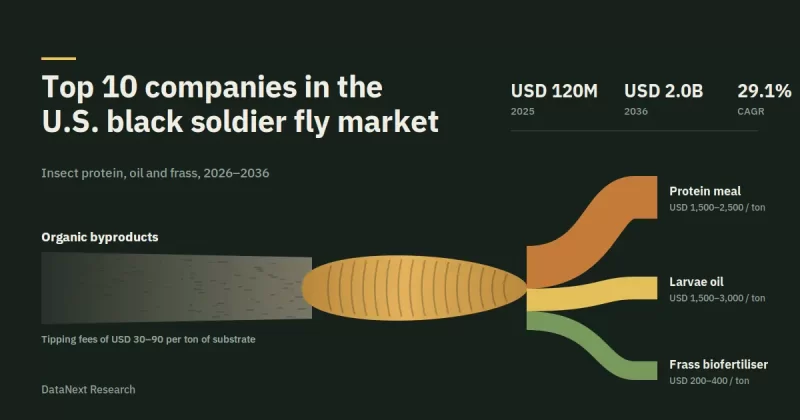
Top 10 Companies in the U.S. Black Soldier Fly Market
The top 10 U.S. black soldier fly companies in a market heading to USD 2.0 billion by 2036 — EnviroFlight, InnovaFeed, Protix, Entobel and more, ranked.
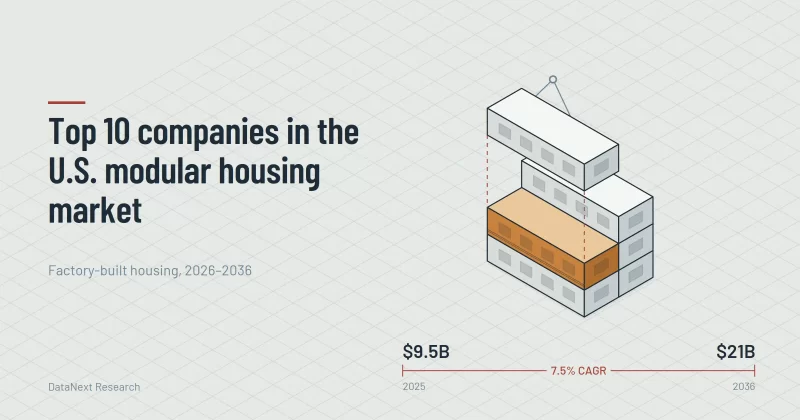
Top 10 Companies in the U.S. Modular Housing Market
Discover the top 10 U.S. modular housing companies driving growth to USD 21 billion by 2036 — Clayton Homes, Champion Homes, Cavco, Fading West and more.
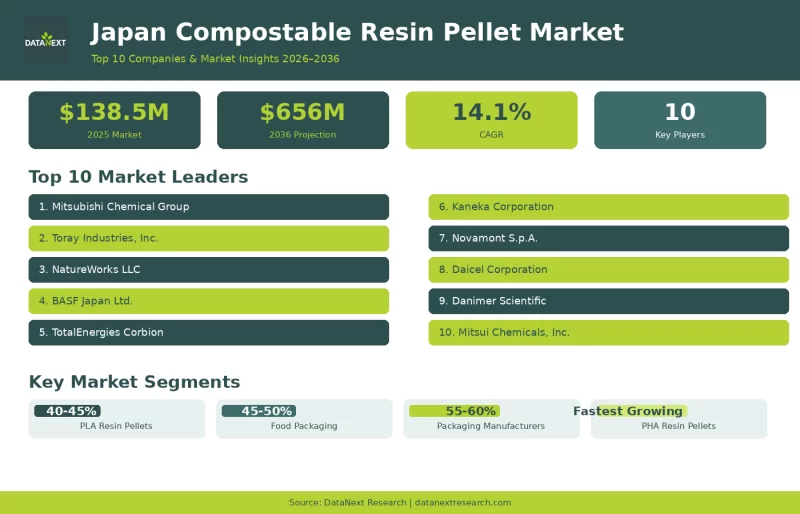
Top 10 Companies in the Japan Compostable Resin Pellet Market
Discover the Top 10 Companies in the Japan Compostable Resin Pellet Market driving growth to USD 656M by 2036, advancing PLA, PHA & bio-based packaging innovation.