
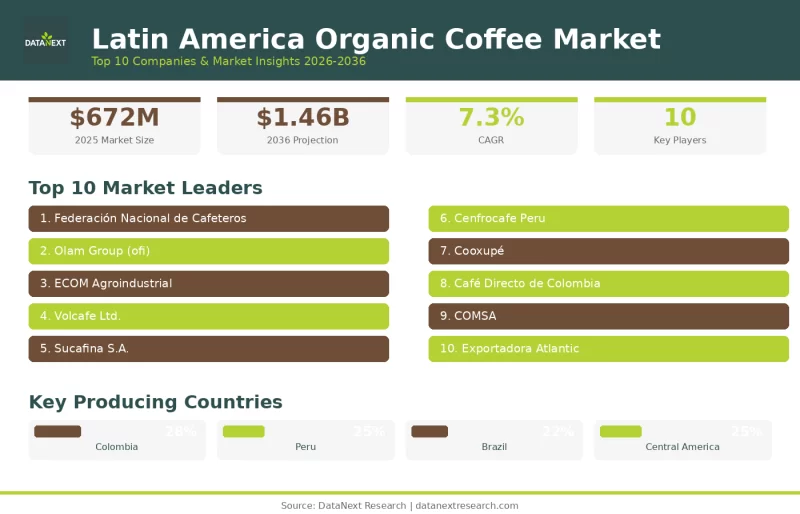
Top 10 Companies in the Latin America Organic Coffee Market
The Latin America organic coffee market stands at the forefront of a global agricultural transformation. Valued at USD 672 million in 2025 and projected to reach USD 1.46 billion by 2036, this market represents far more than numbers, it embodies a fundamental shift toward sustainable farming, ethical sourcing, and climate-resilient agriculture. With Latin America serving as the world's largest coffee-producing region, the organic coffee segment has become a crucial driver of both environmental sustainability and economic empowerment for hundreds of thousands of smallholder farmers.
The robust 7.3% CAGR from 2026 to 2036 shows increasing global consumer demand for products that are not only organic but also traceable, ethically sourced, and climate-positive. As consumers in North America and Europe increasingly prioritize sustainability, Latin American producers are leveraging favorable climatic conditions, government support, and cooperative models to expand organic cultivation across the region.
Looking for a deeper understanding of how sustainability certifications, cooperative-led sourcing models, and export dynamics are shaping the future of organic coffee production in Latin America?
Explore the full market analysis: https://datanextresearch.com/report/latin-america-organic-coffee-market-2026-2036
This growth of the overall Latin American organic coffee market is being driven by a unique ecosystem of cooperatives, integrated exporters, and origin-active entities that bridge the gap between millions of smallholder farmers and the global specialty coffee market. Here are the top 10 organizations driving this transformation in Latin America organic coffee industry.
1. Federación Nacional de Cafeteros de Colombia
Founded in 1927, the Federación Nacional de Cafeteros de Colombia (FNC) represents approximately 540,000 coffee-growing families and serves as a key institutional body supporting Colombia’s coffee sector. The Federation provides technical assistance, research support, and market access services to smallholder coffee producers across the country.
Through its research arm, the National Coffee Research Center (Cenicafé), established in 1938, the Federation conducts research on sustainable coffee production practices, disease-resistant coffee varieties, and climate-resilient cultivation techniques. The Federation also operates a domestic coffee purchase guarantee mechanism that ensures the permanent purchase of coffee from registered producers at reference prices based on international market conditions.
The Federation manages the National Coffee Fund, which supports public goods such as extension services, scientific research, and international promotion activities. The Juan Valdez® brand, introduced by the Federation in 1981, has contributed to the global positioning of Colombian coffee in the premium arabica segment. With representation offices in major international markets, the Federation supports the commercialization of Colombian coffee across global supply chains.
2. Olam Group Limited (now ofi - Olam Food Ingredients)
Olam Group Limited, which operates its food, beverage, and ingredients business under ofi (Olam Food Ingredients), is one of the world’s leading vertically integrated agri-business companies. Founded in 1989 and headquartered in Singapore since 1996, the company has established a strong global footprint with operations in over 60 countries and a customer base exceeding 20,000 B2B clients across food and beverage value chains.
Within the global coffee industry, ofi has emerged as a significant participant through its farm-to-consumer integrated supply chain model, encompassing origination, processing, sustainability implementation, trading, and global distribution. The company sources conventional, specialty, certified, and organic coffee through direct and indirect procurement networks across major Latin American producing countries such as Brazil, Colombia, Peru, Honduras, and other Central American origins.
The company’s coffee platform is supported by an extensive farmer ecosystem comprising hundreds of thousands of smallholder producers globally, along with owned processing infrastructure and digital traceability systems. Through proprietary sustainability and data-driven platforms such as Olam Farmer Information System (OFIS) and AtSource, ofi enables farm-level monitoring, supply chain transparency, and compliance with organic and sustainability certification requirements, critical for specialty and organic coffee procurement.
As part of its strategic restructuring initiative announced in 2020, Olam consolidated its coffee, cocoa, dairy, nuts, and spices portfolio under ofi to strengthen focus on value-added food ingredients. In addition, its specialty coffee business operates under the brand Covoya Specialty Coffee, with commercial presence in key consuming markets including the U.S. and the U.K.
Olam Group has also been included in the FTSE4Good Index Series since June 2020, reflecting its continued progress in environmental, social, and governance (ESG) performance. The company’s scale, traceability capabilities, and sustainability-linked sourcing programs position it as a strategic supply partner for organic coffee producers across Latin America seeking access to premium global markets.
3. ECOM Agroindustrial Corp. Limited
ECOM Agroindustrial Corp. Limited, headquartered in Switzerland, is one of the world’s leading integrated commodity merchants and supply chain managers, with core operations spanning coffee, cocoa, and cotton. The company maintains a strong presence in the global coffee value chain, particularly across Latin America, where it has developed deep-rooted origination capabilities and long-term sourcing relationships with certified organic and sustainable coffee producers.
The coffee division of ECOM operates extensively across major producing countries including Brazil, Colombia, Peru, Mexico, Honduras, and other Central American origins, supported by a localized procurement model that emphasizes direct engagement with farmer cooperatives, producer groups, and exporter networks. This approach enables the company to serve as a critical intermediary between smallholder organic coffee growers and global roasters seeking certified and traceable supply.
The company maintains an established network of processing mills, warehousing infrastructure, and export platforms throughout Latin America, allowing it to deliver integrated services such as quality assessment, certification facilitation (including Organic and Fairtrade), logistics management, and pre-financing support to producer organizations. These capabilities have played a significant role in enabling smallholder cooperatives to access premium international markets linked to sustainability-driven demand.
The sustainability framework of ECOM focuses on enhancing farm productivity, climate resilience, and socio-economic inclusion within coffee-growing communities. Through partnerships with certification bodies and downstream buyers, the company supports producers in meeting evolving compliance requirements related to organic and responsible sourcing standards, while ensuring supply chain traceability through origin-level monitoring systems.
Leveraging its global trading expertise, origin presence, and longstanding relationships with both producers and international buyers, ECOM continues to play a pivotal role in scaling Latin America’s organic coffee exports and facilitating supply linkages to specialty and commercial coffee markets across North America, Europe, and Asia-Pacific.
4. Volcafe Ltd. (A Subsidiary of ED&F Man Holdings Limited)
Volcafe Ltd., a wholly owned subsidiary of ED&F Man Holdings Limited, is one of the world’s leading green coffee merchants with a legacy in agricultural commodity trading spanning over two centuries. The company has established a strong global presence in coffee origination, with particular expertise in sourcing specialty, certified, and organic coffees from key producing regions, including Latin America.
Volcafe operates extensive sourcing networks across major coffee-producing countries such as Brazil, Colombia, Peru, Honduras, and Guatemala, supported by in-origin teams that engage directly with producer cooperatives and farmer groups. The company’s procurement model emphasizes long-term sourcing relationships and quality differentiation, with active participation in certification-linked supply chains, including Organic, Fairtrade, and Rainforest Alliance-certified coffees.
Through its regional origination platforms, Volcafe provides integrated services encompassing technical agronomy support, quality assessment, certification facilitation, milling, and export logistics. Its in-country infrastructure enables efficient aggregation and processing of certified organic coffee volumes intended for specialty and premium commercial markets across North America and Europe.
The company also implements producer support programs focused on advance financing, farm-level training, and certification readiness, assisting cooperatives in scaling organic production capacity while maintaining compliance with evolving sustainability standards. These initiatives are aligned with Volcafe’s broader responsible sourcing framework and climate-resilient agriculture strategy.
Leveraging its global trading network and presence in over 40 consuming markets, Volcafe plays a critical role in linking Latin American organic coffee producers with international roasters and retailers. Its expertise in cupping, grading, and supply chain management positions the company as a key commercialization partner for cooperatives targeting high-value specialty coffee segments.
5. Sucafina S.A.
Sucafina S.A., headquartered in Geneva, Switzerland, is a prominent global coffee merchant specializing in integrated supply chain services across green coffee sourcing, processing, and distribution. With origins tracing back to 1905 (through legacy family trading operations), the company has built a strong presence in the global coffee trade, including certified and organic coffee segments across Latin America.
Sucafina operates across major producing countries such as Brazil, Colombia, Peru, and Honduras, supported by a decentralized origination structure that emphasizes direct collaboration with farmer cooperatives and producer associations. The company’s sourcing model focuses on strengthening producer partnerships by offering services including quality evaluation, certification assistance, export logistics, and improved access to premium international markets.
The organic coffee platform of the company is supported by in-origin quality control laboratories and cupping facilities, enabling precise grading, traceability validation, and lot differentiation aligned with specialty and certified coffee buyer requirements. These capabilities assist cooperatives in optimizing product quality and achieving higher price realization in organic-certified segments.
Sucafina has also expanded investments in sustainability-linked initiatives aimed at supporting organic farming practices, certification readiness, climate resilience, and biodiversity conservation. Through structured farmer support programs and responsible sourcing frameworks, the company facilitates compliance with evolving organic and environmental standards within global coffee supply chains.
Leveraging its international marketing and distribution network, Sucafina connects Latin American organic coffee producers with specialty roasters, commercial coffee brands, and retail buyers across North America, Europe, and Asia-Pacific. Its established expertise in quality assurance, logistics integration, and sustainable sourcing positions the company as a strategic commercialization partner within the organic coffee value chain.
6. Cooperativa Agraria Cafetalera Cenfrocafe Peru
Cooperativa Agraria Cafetalera Cenfrocafe Peru is one of Latin America’s leading smallholder coffee cooperatives specializing in certified organic and Fairtrade Arabica coffee production. Headquartered in the northern highland regions of Cajamarca and Amazonas (Peru), the cooperative aggregates coffee output from thousands of smallholder producers, primarily cultivating high-altitude shade-grown Arabica varieties suited for specialty and organic-certified markets.
Cenfrocafe has established integrated infrastructure for primary processing, quality control, certification management, and export readiness, enabling member farmers to participate directly in premium global value chains. The cooperative provides a range of farmer support services including organic certification facilitation, agronomic training in sustainable farming practices, access to micro-financing mechanisms, and procurement frameworks that incorporate Organic and Fairtrade price premiums.
Its operational model focuses on consolidating small-volume production from geographically dispersed farming households into commercially scalable export lots, while maintaining compliance with international organic certification and traceability standards. Cenfrocafe also operates its own milling and export platforms, allowing the cooperative to engage directly with international roasters and trading partners—thereby enhancing value retention at the producer level.
Peru is among the world’s leading exporters of certified organic Arabica coffee, and cooperatives such as Cenfrocafe have played a pivotal role in expanding the country’s presence in certified specialty markets. The cooperative promotes environmentally sustainable cultivation practices, including shade-grown production systems, soil conservation techniques, and biodiversity preservation, aligned with long-term climate resilience goals.
Through its cooperative-led sourcing and sustainability-driven production model, Cenfrocafe represents a scalable example of how organized smallholder networks can effectively compete in global organic coffee markets while supporting environmental stewardship and rural livelihood development.
7. Cooxupé
Cooxupé (Cooperativa Regional de Cafeicultores em Guaxupé) is Brazil’s largest coffee cooperative and among the largest coffee cooperatives globally, representing more than 16,000 coffee-producing member farmers across the southern regions of Minas Gerais and São Paulo. Established in 1932, the cooperative plays a central role in aggregating, processing, and commercializing Brazilian Arabica coffee for domestic and international markets.
While historically focused on conventional coffee production, Cooxupé has progressively expanded its participation in certified and sustainably produced coffee segments, including organic-certified offerings, in response to rising demand from specialty and environmentally conscious buyers.
The cooperative operates a comprehensive infrastructure network comprising processing units, storage warehouses, quality control laboratories, and export platforms, enabling it to deliver end-to-end support to member farmers transitioning toward organic and certification-aligned production systems. These services include technical agronomic assistance, certification facilitation, access to rural credit, and procurement mechanisms incorporating sustainability-linked price premiums.
The scale of Cooxupé supports advanced cupping and laboratory-based quality evaluation systems, allowing for the identification and differentiation of certified organic and specialty-grade coffee lots. In addition, the cooperative has implemented farmer support programs focused on soil health management, organic input utilization, and integrated pest management (IPM) to facilitate the transition toward environmentally sustainable cultivation practices while maintaining yield and quality consistency.
Through its established global marketing and export channels, Cooxupé connects Brazilian organic coffee producers with specialty roasters, commercial brands, and retailers across North America, Europe, and Asia-Pacific. Its reputation for product consistency, supply reliability, and quality assurance positions the cooperative as a key supplier within the global organic Arabica coffee segment.
8. Café Directo de Colombia S.A.
Café Directo de Colombia S.A. is a Colombia-based coffee exporting company specializing in the procurement and commercialization of certified organic and sustainably produced Arabica coffees. The company operates through direct engagement with farmer cooperatives and producer organizations across key coffee-growing regions, including the traditional Eje Cafetero (Coffee Triangle) as well as emerging specialty-producing areas such as Cauca, Nariño, and the Sierra Nevada de Santa Marta.
The sourcing model of the company is structured around direct trade relationships, emphasizing supply chain transparency, price fairness, and long-term commercial partnerships with smallholder producer communities. Café Directo provides integrated support services including quality evaluation, certification facilitation, export logistics, and international market linkage, particularly tailored to meet the compliance and traceability requirements associated with organic-certified coffee production.
Its focus on high-altitude Arabica cultivation, especially from regions such as Cauca and Nariño, known for their volcanic soil composition and favorable agro-climatic conditions, enables the company to source differentiated organic coffee lots with distinctive cup profiles suited for specialty market segments.
Through its exporter platform, Café Directo connects Colombian organic coffee cooperatives with specialty roasters, commercial brands, and sustainability-driven buyers across North America and Europe, supporting producer communities in maintaining certification-aligned farming practices while enhancing product quality and market competitiveness.
Leveraging a relationship-based sourcing approach aligned with evolving specialty coffee procurement trends, Café Directo plays an important intermediary role in enabling Colombian smallholder farmers to access premium global markets that reward both environmental stewardship and superior cup quality.
9. Café Orgánico Marcala S.A. (COMSA)
Café Orgánico Marcala S.A. (COMSA) is a Honduras-based coffee cooperative specializing in the production and export of certified organic specialty Arabica coffee. Headquartered in the Marcala region of western Honduras—a recognized Denomination of Origin (DO) for high-quality coffee—the organization has developed a strong reputation within international specialty markets for its sustainability-driven production systems.
COMSA operates as a second-tier cooperative, aggregating coffee output from multiple primary cooperatives and smallholder farmer groups across the Marcala coffee-growing zone. This federated structure enables the consolidation of geographically dispersed small-lot organic production into commercially viable export volumes, while ensuring compliance with certification and specialty-grade quality standards.
The cooperative provides a broad range of member support services including organic certification facilitation, technical training in agroecological farming practices, access to financing mechanisms, and post-harvest quality improvement programs. Its emphasis on farm-level quality enhancement has enabled participating producers to access differentiated market channels and secure price premiums linked to organic and specialty certification.
COMSA has played a significant role in strengthening the global positioning of the Marcala DO as a premium origin for organic-certified Arabica coffee. The cooperative promotes environmentally sustainable cultivation methods such as shade-grown production systems, soil conservation practices, and biodiversity preservation, aligned with long-term climate resilience objectives.
Through its cooperative-led commercialization model, COMSA facilitates direct market access for smallholder farmers to specialty roasters and sustainability-focused buyers across North America and Europe, demonstrating the economic viability of organic-certified coffee production within Central America’s smallholder farming systems.
10. Exportadora Atlantic S.A.
Exportadora Atlantic S.A. is a Central America-based coffee exporting company specializing in the sourcing and commercialization of certified organic and specialty Arabica coffees. The company maintains strong operational presence across key producing countries including Honduras, Nicaragua, and Guatemala, working in close coordination with farmer cooperatives and producer associations engaged in certification-aligned coffee production.
The sourcing model of Exportadora Atlantic emphasizes long-term partnerships with smallholder cooperatives, providing integrated support services such as quality assessment, certification facilitation, export logistics management, and international market linkage. These services are particularly critical for organic-certified producers seeking to meet traceability, documentation, and compliance requirements associated with specialty coffee trade.
The company operates regional processing and quality control infrastructure within major coffee-producing zones, enabling the aggregation, preparation, and grading of certified organic coffee lots for export. Its cupping and quality evaluation platforms support producer groups in optimizing post-harvest handling and achieving the consistency standards required for premium market access.
Through its global marketing and distribution network, Exportadora Atlantic connects Central American organic coffee cooperatives with specialty roasters, commercial coffee brands, and retail buyers across North America, Europe, and Asia-Pacific. Its relationship-driven procurement approach aligns with evolving buyer preferences for traceable, sustainably sourced organic coffee supply.
In addition, the company supports farmer communities through technical assistance programs, pre-financing mechanisms, and sustainability-focused training initiatives, contributing to improved production practices and long-term supply chain resilience. Exportadora Atlantic continues to play an enabling role in facilitating international market access for Central America’s certified organic coffee producers.
Cultivating a Sustainable Future
The Latin America organic coffee market represents a combination of environmental sustainability, social empowerment, and agricultural excellence. The projected growth from USD 722 million in 2026 to USD 1.46 billion by 2036 reflects not just market expansion but a fundamental transformation in how coffee is produced, traded, and valued.
These ten organizations, spanning cooperatives, integrated exporters, and trading companies, play essential roles in this transformation. Each brings distinct capabilities, from the Colombian Coffee Federation's comprehensive farmer support infrastructure to Olam's global scale and logistics, from Cenfrocafe's successful smallholder cooperative model to ECOM's extensive origination networks.
The success of Latin American organic coffee sector demonstrates that environmental sustainability and economic viability are not only compatible but mutually reinforcing. Organic farming practices reduce carbon emissions by 25-45 percent compared to conventional coffee, improve soil health, enhance water-use efficiency by 20-35 percent, and support biodiversity conservation through shade-grown systems. These environmental benefits create the foundation for long-term productivity and climate resilience.
As global consumer demand for sustainable, traceable, and ethically sourced products continues to grow, these organizations are positioning Latin America to maintain its leadership in the premium coffee market. The region's combination of ideal growing conditions, established cooperative infrastructure, and increasing focus on regenerative agriculture creates a powerful competitive advantage.
The future of Latin American organic coffee market will be shaped by continued innovation in sustainable farming practices, investments in climate resilience, expansion of direct trade relationships, and growing consumer awareness of coffee's environmental and social impacts. The companies and cooperatives profiled here are not just responding to market trends, they are actively shaping a more sustainable future for coffee production and rural communities throughout Latin America.
With global demand for certified organic and sustainably sourced coffee accelerating, Latin America is rapidly emerging as the strategic supply hub for premium-grade Arabica exports.
Are you positioned to benefit from this shift?
Our Latin America Organic Coffee Market (2026–2036) report delivers:
- Country-level production and export outlook
- Organic certification trends and supply-chain dynamics
- Cooperative vs. trader-led sourcing models
- Sustainability and traceability benchmarks
- Competitive profiling of leading exporters and cooperatives
Download the Sample Report Now:
https://datanextresearch.com/report/latin-america-organic-coffee-market-2026-2036?action=Download+Sample
Access the Full Market Report:
https://datanextresearch.com/report/latin-america-organic-coffee-market-2026-2036
Related Articles
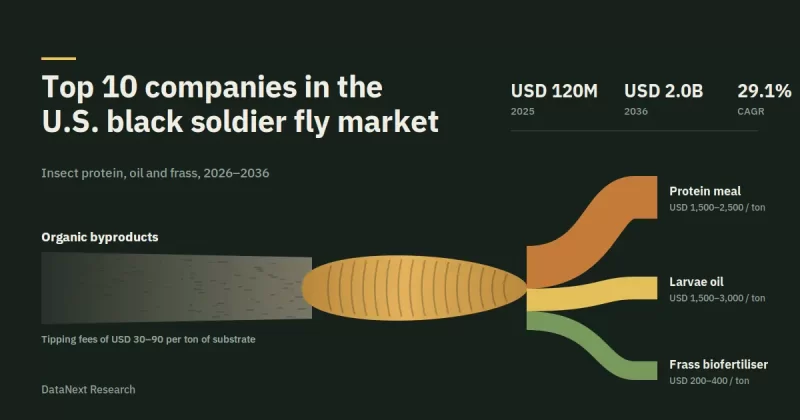
Top 10 Companies in the U.S. Black Soldier Fly Market
The top 10 U.S. black soldier fly companies in a market heading to USD 2.0 billion by 2036 — EnviroFlight, InnovaFeed, Protix, Entobel and more, ranked.
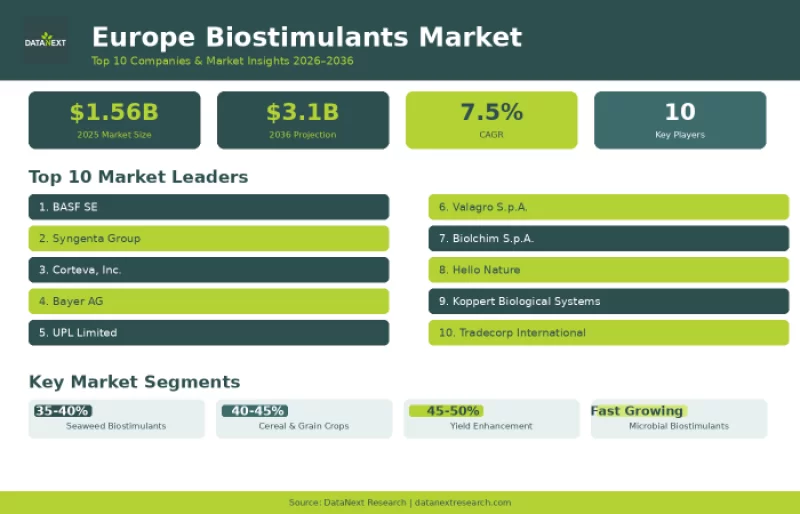
Top 10 Companies in the Europe Biostimulants Market
Discover the Top 10 Companies in the Europe Biostimulants Market driving growth to USD 3.1B by 2036. Explore leaders like BASF, Syngenta, Corteva, and more shaping sustainable crop inputs, plant growth, and stress resilience across European agriculture.
Best Food Processing Companies in Europe (Top 10) | Market Leaders & Innovation
Explore the top 10 food processing companies in Europe driving innovation, sustainability, and market growth across dairy, snacks, nutrition, and ingredients.