
Top 10 Companies in the Japan Compostable Resin Pellet Market
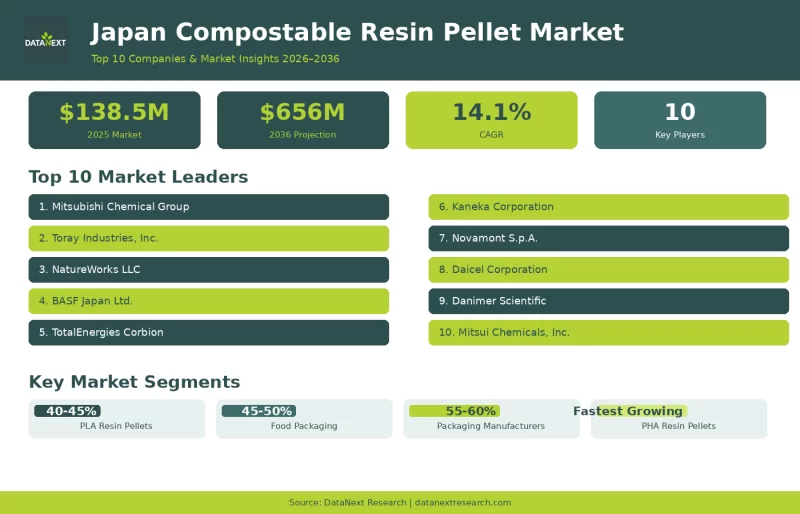
The Japan compostable resin pellet market is valued at USD 138.5 million in 2025 and projected to reach USD 656 million by 2036, at a CAGR of 14.1% from 2026.
This rapid growth is mainly attributed to the combination of regulatory force, corporate commitment, and technological maturation. Japan's Plastic Resource Circulation Act, enacted in 2022 and progressively tightened through implementation ordinances, mandates phased elimination of single-use plastic bags, sets ambitious 25% plastic waste reduction targets by 2030, and creates economic incentives for compostable alternatives through extended producer responsibility schemes. Major Japanese corporations, from convenience store operators like Seven & i Holdings to food packaging manufacturers like Daicel and Mitsubishi Chemical, have committed to 100% sustainable packaging within the decade, driving demand for PLA, PBS, PHA, and advanced compostable resin blends across food service, retail, and agricultural applications.
Looking for a deeper understanding of how compostable polymers, bio-based packaging materials, and industrial composting infrastructure are shaping the future of sustainable materials adoption across Japan?
Explore the full market analysis:
https://datanextresearch.com/report/japan-compostable-resin-pellet-market
The companies profiled here span the full spectrum from integrated chemical giants with century-long polymer expertise to specialized biopolymer innovators commercializing next-generation fermentation-derived resins. Together, they are building the technical, commercial, and environmental infrastructure for Japan's transition from a linear petroleum-plastics economy to a circular bio-materials system. Here are the top 10 companies leading this transformation.
1. Mitsubishi Chemical Group Corporation
Mitsubishi Chemical Group Corporation is a leading company within Japan compostable resin market, supported by its diversified specialty chemicals portfolio and advanced polymer development capabilities. Headquartered in Tokyo, Japan, the company reported consolidated revenues of approximately JPY 4.7 trillion in FY2024 and operates across performance materials, advanced polymers, and sustainable chemical systems.
Within the biodegradable materials segment, Mitsubishi Chemical has developed BioPBS™, a bio-based polybutylene succinate (PBS) resin produced using fermentation-derived succinic acid. BioPBS is designed to provide processability and mechanical performance suitable for flexible packaging and agricultural film applications, while maintaining industrial compostability under controlled conditions in accordance with recognized international standards.
BioPBS formulations are being evaluated for use in food packaging, compostable bags, and agricultural mulch films as part of broader efforts to reduce reliance on conventional petroleum-based plastics in applications where end-of-life compostability may offer environmental benefits. The company provides technical support to downstream converters to facilitate integration of biodegradable resins into extrusion and thermoforming processes while maintaining product functionality and compliance with compostability certification requirements.
Through continued investment in bio-based polymer development and application engineering, Mitsubishi Chemical is contributing to the advancement of compostable material solutions aligned with Japan’s evolving waste management and circular economy initiatives.
2. Toray Industries, Inc.
Toray Industries, Inc. is another major player in Japan compostable resin market through its development of biomass-derived polymer materials within the ECODEAR™ product range. Headquartered in Tokyo, Japan, Toray reported consolidated revenues of approximately JPY 2.6 trillion in FY2024 and maintains global operations spanning advanced materials, functional polymers, and engineered film technologies.
The ECODEAR portfolio includes biodegradable and bio-based polymer formulations such as polylactic acid (PLA) and polybutylene succinate (PBS), which are utilized in applications including packaging films, agricultural materials, and consumer goods. These materials are designed to support reduced environmental impact through industrial compostability and renewable feedstock utilization under controlled end-of-life conditions.
Toray’s expertise in film extrusion and polymer processing supports the development of biodegradable mulch films intended to reduce plastic residue accumulation in agricultural soils. Such materials are being evaluated for use in farming applications where soil-degradable film systems may eliminate the need for post-harvest plastic removal.
In addition, Toray continues to conduct performance assessments of biodegradable polymer materials under standardized composting environments to support certification and application validation across packaging and agricultural use cases.
3. NatureWorks LLC
NatureWorks LLC operates in Japan compostable resin market through its Ingeo™ polylactic acid (PLA) biopolymer platform. Headquartered in Minnesota, U.S., NatureWorks is jointly owned by Cargill and PTT Global Chemical and operates large-scale PLA production facilities in the United States and Thailand to support global supply.
Ingeo PLA is produced from renewable feedstocks such as fermented plant sugars and is designed for use in rigid packaging, films, and nonwoven applications requiring industrial compostability under controlled conditions. In the Japanese market, Ingeo materials are being evaluated for thermoformed food packaging, serviceware, and consumer goods applications where material transparency, rigidity, and processability are critical.
NatureWorks supplies PLA resins to regional compounders and converters engaged in the development of biodegradable packaging formats aligned with evolving sustainability requirements. The company also provides technical support to assist customers in adapting processing conditions for PLA-based materials across injection molding and thermoforming processes.
4. BASF Japan Ltd.
BASF Japan Ltd. markets the ecovio® family of certified compostable resin compounds developed by BASF’s global biopolymer research organization. ecovio formulations combine BASF’s proprietary PBAT (polybutylene adipate terephthalate) base polymer with PLA and starch-based components to achieve application-specific performance characteristics across packaging and agricultural uses.
These materials are designed for use in applications including carrier bags, organic waste collection bags, food packaging films, and agricultural mulch films where industrial compostability may support waste diversion strategies. ecovio grades developed for blown film processing are engineered to provide tear resistance and flexibility suitable for packaging applications under controlled composting end-of-life conditions.
BASF Japan provides application development support through its regional technical centers, working with local converters to optimize processing parameters and support certification efforts in accordance with compostability standards recognized by industry associations such as the Japan BioPlastics Association.
5. TotalEnergies Corbion
TotalEnergies Corbion, a joint venture between TotalEnergies and Corbion, supplies polylactic acid (PLA) resins to the Japanese compostable materials market from its production facility in Rayong, Thailand. The joint venture currently operates with an annual production capacity of approximately 75,000 metric tons and has announced plans to expand capacity in response to increasing demand across Asian markets.
TotalEnergies Corbion’s PLA grades are designed for applications including thermoformed packaging, fiber-based nonwovens, and film extrusion systems where biodegradability and renewable feedstock utilization are desired under controlled end-of-life conditions.
The company supplies PLA materials to compounders and converters engaged in the development of biodegradable packaging and agricultural materials, supporting evaluation of compostable polymer solutions aligned with circular economy objectives in Japan.
6. Kaneka Corporation
Kaneka Corporation operates in Japan compostable resin market through its proprietary Green Planet™ biodegradable polymer platform. Headquartered in Osaka, Japan, Kaneka operates across specialty polymers, life sciences, and performance materials, with ongoing investments in bio-based material technologies aligned with circular economy objectives.
Green Planet is a polyhydroxyalkanoate (PHA)-based biopolymer produced through microbial fermentation of plant-derived feedstocks. The material is designed to offer industrial compostability and biodegradability in a range of environments, including marine conditions, under specified standards. This characteristic differentiates PHA-based materials from other biodegradable polymers that typically require controlled composting infrastructure for end-of-life degradation.
Kaneka’s PHA materials are being evaluated for use in packaging applications, including foamed protective packaging formats where cushioning performance and lightweight construction are required. The company operates PHA production facilities utilizing proprietary fermentation processes and continues to expand application development efforts for biodegradable polymer solutions across packaging and consumer goods segments.
Through continued investment in bio-based polymer manufacturing and downstream processing support, Kaneka is contributing to the development of compostable material alternatives aligned with Japan’s plastic resource circulation initiatives.
7. Novamont S.p.A.
Novamont S.p.A., an Italy-based developer of biodegradable materials, operates in Japan compostable resin market through its Mater-Bi® family of bio-based and biodegradable polymer compounds. Mater-Bi materials are produced from blends of starch and biodegradable polyesters and are engineered for use in applications including packaging films, compostable bags, and agricultural materials.
In agricultural applications, Mater-Bi-based mulch films are designed to provide soil moisture retention and weed suppression benefits during crop growth cycles while offering biodegradation under specified soil conditions at end of life. Such materials are being evaluated as alternatives to conventional polyethylene mulch films, which require removal and disposal following harvest.
Novamont’s integrated approach to bio-based material development—incorporating renewable feedstocks and biodegradable polymer technologies—supports application development across packaging and agricultural use cases aligned with circular economy policy initiatives in Japan.
8. Daicel Corporation
Daicel Corporation operates in Japan biodegradable materials market through its development of cellulose-based polymer materials derived from renewable biomass feedstocks. Headquartered in Osaka, Japan, Daicel operates across performance materials, organic chemicals, and engineered polymers, with longstanding expertise in cellulose acetate technologies.
Cellulose acetate materials are being evaluated for use in packaging and specialty applications where optical clarity and thermal stability are required. Certain formulations with controlled degrees of substitution may exhibit biodegradability under specified environmental conditions, supporting their consideration as alternatives to petroleum-derived plastics in selected use cases.
Daicel’s development of biomass-derived polymer materials aligns with Japan’s established forestry resources and pulp-processing infrastructure. The use of domestically sourced cellulose feedstocks may support supply chain resilience and reduce reliance on imported agricultural raw materials in bio-based polymer production.
9. Danimer Scientific
Danimer Scientific operates in Japan compostable resin market through its Nodax® polyhydroxyalkanoate (PHA) biopolymer platform. Headquartered in Bainbridge, Georgia, U.S., Danimer develops PHA-based materials produced via bacterial fermentation of plant-derived oils.
PHA materials are designed to offer biodegradability under industrial composting conditions and, in certain formulations, may also exhibit biodegradation in soil and marine environments in accordance with recognized testing standards. These characteristics differentiate PHA from biodegradable polymers that require strictly controlled composting infrastructure for end-of-life degradation.
Danimer supplies PHA materials to compounders and converters engaged in the development of biodegradable packaging and consumer goods applications aligned with evolving sustainability objectives. Ongoing evaluation of PHA-based materials in packaging applications reflects growing interest in compostable polymer alternatives within Japan’s plastic resource circulation initiatives.
10. Mitsui Chemicals, Inc.
Mitsui Chemicals, Inc. operates in Japan compostable resin market through its polymer compounding capabilities, materials development expertise, and established domestic distribution infrastructure. Headquartered in Tokyo, Japan, the company operates across petrochemicals, performance materials, and functional products, with ongoing initiatives focused on the development and processing of sustainable polymer systems.
The compounding facilities of Mitsui support the formulation of biodegradable and bio-based polymer materials tailored for specific end-use applications. These include the incorporation of impact modifiers, heat stabilizers, and processing aids to enhance the performance and processability of compostable resins within injection molding, film extrusion, and thermoforming environments.
Such localization capabilities may help address technical challenges associated with transitioning from conventional plastics to compostable alternatives, particularly where material performance requirements must be aligned with existing manufacturing equipment and product specifications.
Mitsui Chemicals maintains established relationships across Japan’s packaging, automotive, and consumer goods industries, supporting evaluation and integration of next-generation material solutions aligned with evolving sustainability and circular economy initiatives.
Japan Compostable Resin Pellet Market: Advancing Circular Material Systems
The Japan compostable resin pellet market is projected to grow from USD 158.7 million in 2026 to USD 656 million by 2036. This growth reflects a gradual shift in material use patterns as industries evaluate alternatives to conventional petroleum-based plastics in response to evolving sustainability goals and waste reduction initiatives. The transition toward compostable polymers forms part of Japan’s broader efforts to promote resource efficiency and support circular material flows across packaging, agriculture, and consumer goods applications.
The companies profiled in this report collectively represent the range of capabilities required to support this transition. Mitsubishi Chemical Group and Toray Industries contribute domestic manufacturing scale and advanced polymer development expertise. NatureWorks and TotalEnergies Corbion provide access to commercially established PLA production platforms. BASF offers compound formulation and application support capabilities, while Kaneka and Daicel contribute bio-based material technologies based on PHA and cellulose derivatives. Novamont and Danimer Scientific supply biodegradable polymer materials with global commercialization experience, and Mitsui Chemicals supports local compounding and distribution of bio-based resins within Japan.
Future market development is expected to depend on continued improvements in material performance and cost competitiveness, expansion of industrial composting infrastructure, evolving regulatory frameworks governing plastic use, and increasing sustainability commitments from brand owners and retailers. Japan’s coordinated approach, combining policy support, industrial R&D investment, and infrastructure development, positions the country to advance the adoption of compostable materials across selected applications over the coming decade.
As manufacturers and packaging converters in Japan increasingly evaluate alternatives to conventional plastics in response to regulatory developments and corporate sustainability targets, compostable resin pellets are emerging as a key material category within circular economy initiatives.
Are you positioned to benefit from this transition?
Our Japan Compostable Resin Pellet Market (2026–2036) report delivers:
- Application-level demand outlook across packaging and agriculture
- PLA, PHA, PBS, and cellulose-based resin technology landscape
- Regulatory impact analysis under Japan’s Plastic Resource Circulation Act
- Industrial composting infrastructure readiness assessment
- Competitive profiling of leading compostable resin suppliers
Download the Sample Report Now:
https://datanextresearch.com/report/japan-compostable-resin-pellet-market?action=Download+Sample
Access the Full Market Report:
https://datanextresearch.com/report/japan-compostable-resin-pellet-market
Related Articles
Top 10 Companies in the Europe Barrier Coating Market
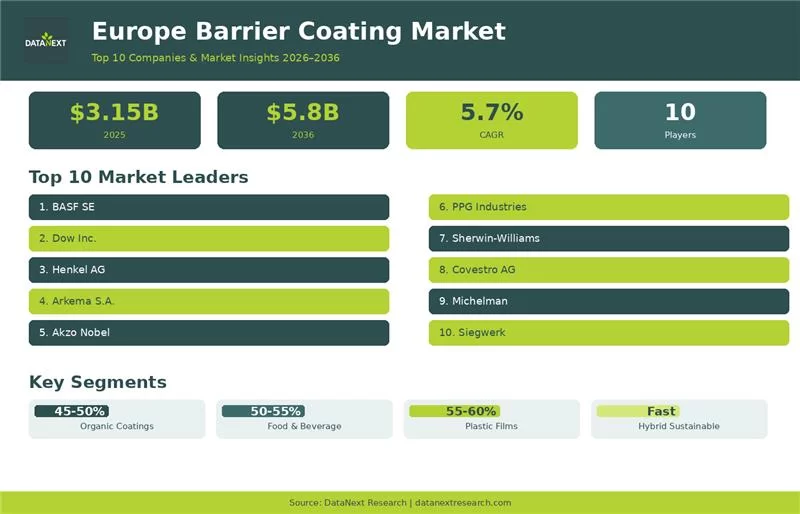
Discover the Top 10 Companies in the Europe Barrier Coating Market driving growth to USD 5.8B by 2036. Explore leaders like BASF SE, Dow Inc., Henkel AG & Co. KGaA and more shaping sustainable, PFAS-free, recyclable packaging solutions across Europe.